

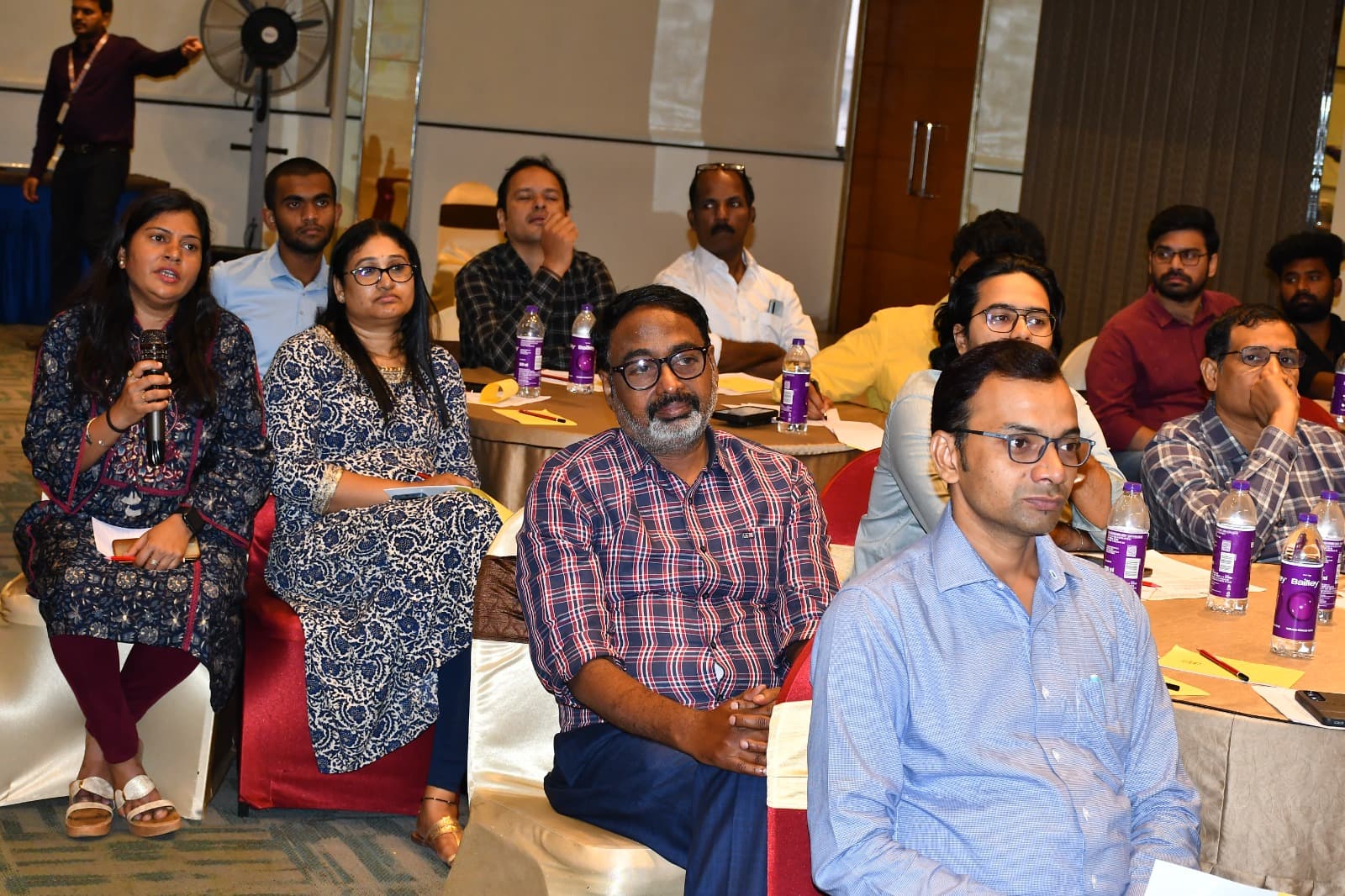
Two days in a Hyderabad conference room, alongside a cohort of first- and second-generation Indian exporters, is a different kind of classroom. The Federation of Indian Export Organisations (FIEO), Telangana Chapter, ran its two-day certificate programme — 'Export Opportunities and How to Start an Export Business' — at Hotel Quality Inn Residency on the 23rd and 24th of April 2026. Adalwin Global attended.
This is a field note rather than a conference report — a sorting-through of what was worth keeping, written while it's still fresh. The lead trainer, Mr. Mihir Shah (Consultant and Trainer in International Business, Mumbai), couldn't travel due to health reasons; the sessions that did run on the 23rd and the morning of the 24th were anchored by the FIEO Telangana office and two guest institutions whose content was substantive enough to justify the two-day block on its own.
The room — who presented
Mr. R. Kulkarni, Head of the FIEO Telangana Chapter, opened and anchored the programme. Mr. M. Preethi Pavan Kumar, General Manager at the District Industries Centre (DIC), Hyderabad District, represented the Government of Telangana as chief guest. The two sessions that carried the curriculum were led by Mr. Amlendu Bipul Mishra, AGM and Branch Head at ECGC Limited, Hyderabad, on credit-risk management; and Sri Balakrishna R., Associate Vice President – Trade Forex at Kotak Mahindra Bank, on the mechanics of trade finance.
ECGC — the layer most first-generation exporters underutilise
The highest-value session of the two days was Mr. Mishra's on credit-risk management. For exporters who have graduated from domestic trade, recognising three distinct risk layers — and which institution addresses which — is often the missing piece.
Three risks sit across every international shipment, each with a corresponding mitigation. Physical loss or damage to goods in transit is answered by marine cargo insurance, placed through a general insurer. Exchange-rate volatility between invoice and settlement is answered by forward contracts, options, or natural hedges placed through an Authorised Dealer bank. Buyer default — the importer failing to pay for accepted shipments — is answered by export credit insurance from the Export Credit Guarantee Corporation of India (ECGC). The first two risks are well-understood by most exporters. The third is where coverage gaps quietly compound.
ECGC's architecture runs along two parallel tracks, which surprised several people in the room. The more familiar track is exporter cover — short-term and medium / long-term protection against non-payment for goods and services shipped on credit terms. The less-discussed track is bank cover — financial institutions protected against the non-payment risk when they finance an exporter's pre-shipment or post-shipment receivables. Both tracks, both tenors. The practical consequence: ECGC cover strengthens not just your own balance sheet but your lender's willingness to extend working-capital lines against export orders.
ECGC's Buyer Underwriting Scorecard is a structured credit assessment worth understanding in outline, because it is how the corporation decides whether to cover a particular overseas buyer at all. Four dimensions drive the score. Business ability looks at the buyer's nature of operations, ownership structure, legal obligations, and third-party agency ratings. Financial strength is the quantitative layer — working capital, retained earnings, operating income, sales, net worth, and total debt. Transaction behaviour examines the buyer's claim history with ECGC, their payment track record with the specific exporter, and the exporter's own claims history with ECGC. Industry classification applies sector-level risk weighting on top of the buyer-specific score. It's a 360-degree assessment, and it is run before cover is extended — which is how exporters operating on open-account terms can learn, sometimes uncomfortably, that a buyer they have already quoted is not credit-worthy at the premium they priced in.
Country risk is the second ECGC framework worth noting. The corporation classifies every sovereign destination on four inputs. Macroeconomic and political risk uses ten-plus growth and governance indicators, layered with qualitative assessment. Bilateral trade relations factors in India's diplomatic and economic posture with that specific country, which meaningfully shapes the risk calculus. ECGC's own historical claims experience from the market is cross-referenced with Berne Union peer-insurer data. A forward-looking outlook closes the assessment. For exporters pricing into frontier or emerging markets, the country risk tier determines both coverage eligibility and premium terms — and it is worth checking the tier before the commercial negotiation, not after.
The takeaway from the session — the one most first-time exporters miss — is that ECGC is not a disaster backstop. It is a negotiating tool. An exporter with ECGC cover can extend more generous credit terms than an uncovered competitor (because the covered risk is institutional, not personal), and can raise bank finance more cheaply (because the bank's receivable is also ECGC-secured). Used strategically, it changes what 'open account' actually costs.
Kotak Mahindra — the mechanics of the money moving
Sri Balakrishna R.'s session was the complement — the working mechanics of how funds actually move across an export transaction, and the bank's role at each stage of the cycle.
Four payment mechanisms span the trust spectrum. Advance payment puts maximum security on the exporter (goods ship only after funds are received) and maximum risk on the importer; reasonable for new relationships or high-risk destinations. Letter of credit (LC) is the bank-backed conditional payment — the importer's bank undertakes to pay the exporter against compliant documents, shifting buyer-default risk onto the importer's bank. This is the standard for new, high-value, or cross-border-complex relationships. Documentary collections — DP (documents against payment) and DA (documents against acceptance) — route the banking system into the transaction as document-custodian rather than payment-guarantor; there is procedural control but no payment guarantee. Open account is pure supplier credit: the exporter ships, the importer pays on agreed terms, and the commercial risk sits entirely with the exporter. It is viable only where the relationship and track record are established — or where ECGC-style cover has been placed separately.
The session also walked through pre-shipment and post-shipment finance — how a bank lends against an export order before goods are dispatched (pre-shipment: packing credit in INR or in foreign currency) and after (post-shipment: bill purchase, bill discounting, and export-bill financing) — alongside the mechanics of EEFC (Exchange Earners' Foreign Currency) accounts, which let exporters retain a portion of receivables in foreign currency to offset import outflows or hedge operationally. Forward contracts were covered as the default hedging instrument where rate certainty matters more than flexibility; options, where the delivery date is uncertain enough that a floor-and-flexibility combination is worth its premium.
The institutional-detail sessions aren't glamorous, but they are where exporters who have been burnt wish they had spent more time earlier. Knowing which bank instrument fits which buyer profile is a decision that compounds across every RFQ you issue.
Between the sessions
Some of the best learning wasn't in the slides. In the one to two hours of open conversation between sessions — over coffee and the long lunch — exchanges with other exporters delivered the context no slide deck can substitute. Real margins, real currency pains, real customer disputes, real hesitations about whether to extend open credit to a repeat buyer whose last payment ran thirty days late. A room of people working the same problems in parallel is its own form of compression.
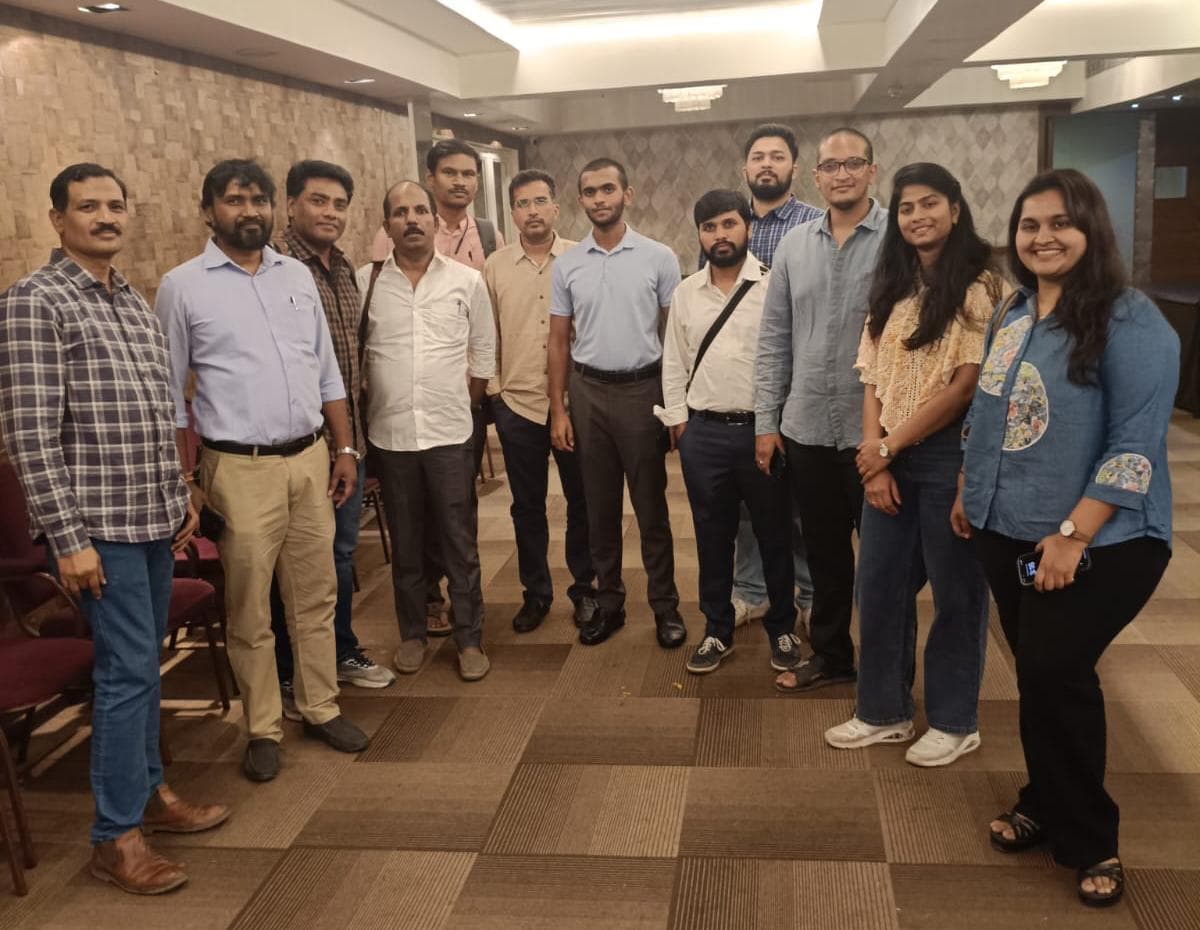
A personal note
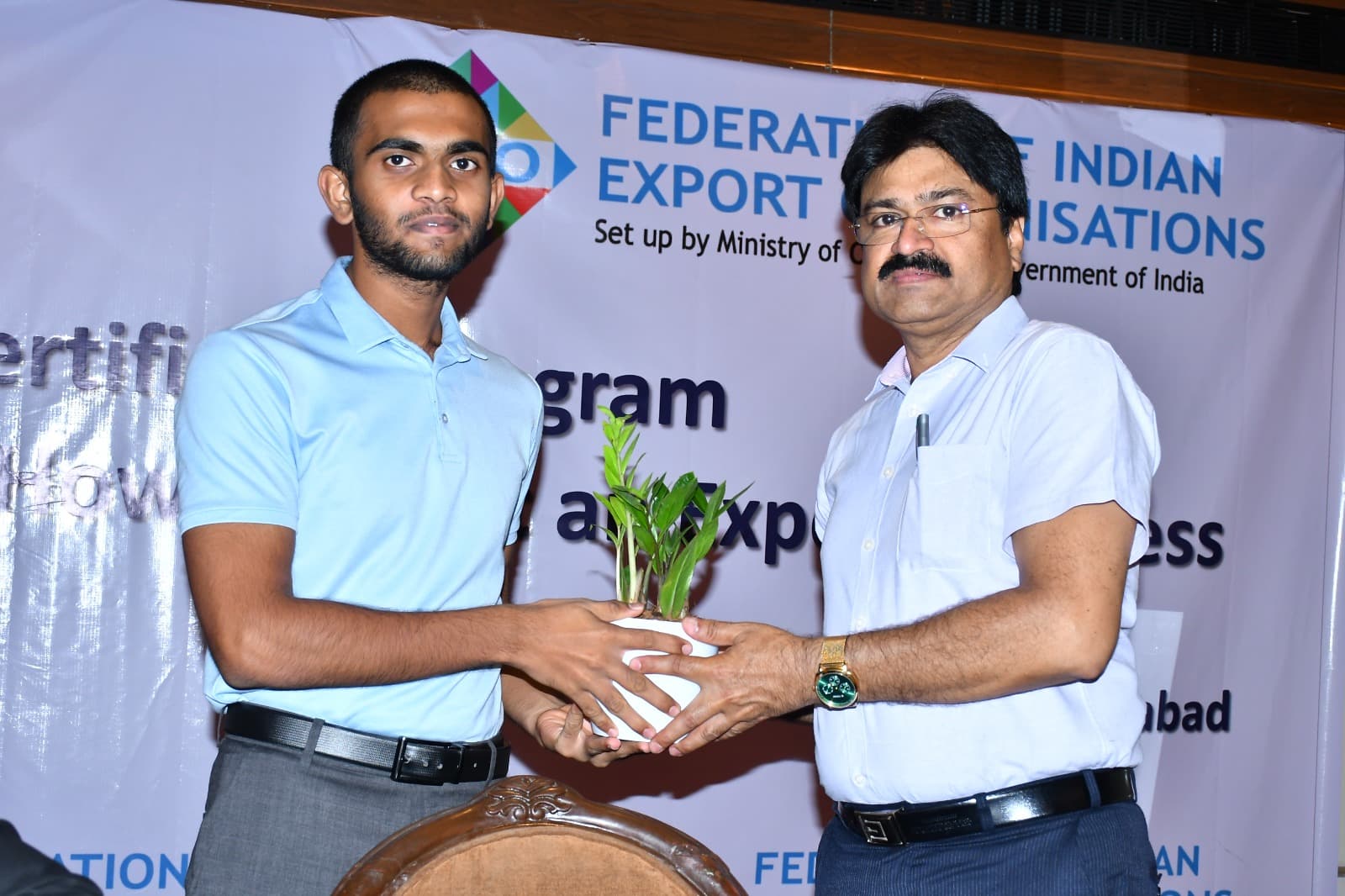
It was an honour to present the welcome memento to the chief guest, Mr. M. Preethi Pavan Kumar, on behalf of Adalwin Global. A small moment, but a meaningful one — Adalwin Global is a first-year exporter out of a twelve-year-old Pune trading house, and being in the room alongside exporters with two decades of shipments behind them is a useful calibration on where we are on the curve.
What Adalwin Global takes from this
Two operational decisions are landing on our side from this programme. First, we are evaluating ECGC short-term cover for first-ship programmes to new buyer accounts — the premium is small against the credit exposure on a single container of hospitality textiles to a new hotel group, and the scorecard itself is a pre-qualification tool independent of whether cover is ultimately placed. Second, we are tightening our trade-finance banking setup so that pre-shipment finance lines are established before RFQs are quoted, not negotiated after the purchase order arrives. Programmes like FIEO's exist precisely so first-generation exporters can compress a learning curve that otherwise costs a decade of avoidable mistakes.
If you are early in the export journey, the next FIEO chapter programme in your region is worth the two days. The Telangana Chapter runs them periodically — and the cohort in the room matters as much as the panellists on the stage.
— Vickram, Adalwin Global